About Me

My photo
Thinker. Artist. Evolving. Want want wanting. Reader. People watcher. Struggler. Etc.

Sunday, November 7, 2010

THE GULF PRINT STORM!


IF YOU M ISS THE FOLLOWING EVENTS, YOU'RE EITHER REALLY STUPID OR DEAD TO ME. :]

Thursday, Nov 18th:
[1PM-4PM]
PRINT DEMONSTRATION @ Lamar University, Art Building-- Print Studio Rm 101 (Technical demonstrations of printmaking techniques)

INK, PAPER AND PROCESS: an Exhibition of Contemporary Prints in America @Dishman Art Museum
[6PM- 7PM] Artists Talks
[7PM-9PM] Opening Reception
Curated by Xenia Fedorchenko and Joseph Velasquez. This exhibition will include recent works by national and international artists. 
___________________________________________________________

Friday, Nov 19th:
[10AM-4PM]
STEAM ROLLER MADNESS!!
@Crockett Street, Downtown Beaumont, TX
Live printing via steam roller downtown on Crockett Street. We are printing with 4'X8' (yes feet) blocks carved by different schools.

Hands on Gelatin Printing will be presented by Michael Travis Lovett and area schools.

[7PM-10PM]
KISS MY PRINTS!
@The Art Studio Inc.
An exhibition of Estonian Prints + an exhibition of prints produced during STEAM ROLLER MADNESS.
A performance by Non Grata, is scheduled.
LIVE MUSIC.
___________________________________________________________

Saturday, Nov 20th:
[7PM - MIDNIGHT]
ART OF INK!
&
INK SLINGERIS BALL!
WRAP PARTY BANDS!
@The Beaumont Art League.
Evening event and reception! More live printing, prints, music and a silent auction of prints by tattoo artists! Non Grata will perform! Local and regional bands are scheduled.

Saturday, November 6, 2010

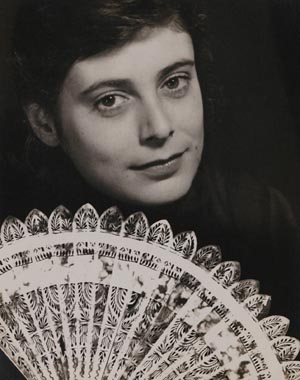
Naomi Savage.


Naomi Savage by Man Ray.

PHOTOGRAPHER
BORN: 1927, Jersey City, New Jersey
DIED: November 22, 2005, Princeton, New Jersey


"While suggesting the essence of the chosen photographic subject, by isolating and simplifying it, or by juxtaposing it with a contrasting idea, these methods have been explored in an attempt to stretch photography with personal interpretation."
Always the Young Stranger, Museum of Modern Art, New York, NY, 1953
Photography at Mid-Century, George Eastman House, Rochester, NY, 1958
The Sense of Abstraction, Museum of Modern Art, New York, NY, 1960
Photography U.S.A., De Cordova Museum, Lincoln, MA, 1962
Photo Exhibition-Extension Study, Museum of Fine Arts, Boston, MA, 1963
Photographs for Collectors, Museum of Modern Art, New York, NY 1966
6 Photographers, University of Illinois at Urbana, IL, 1967
First National Invitational Photography Exhibition, San Jose State College, CA, 1967
Photography as Printmaking, Museum of Modern Art, New York, NY, 1968
Three Women Photographers, Moore College of Art, Philadelphia, PA, 1968
Photography U.S.A. #2, De Cordova Museum, Lincoln, MA, 1968
Three Women Exhibition, Witkin Gallery, New York, NY, 1969
Two Generations of Photographs: Man Ray and Naomi Savage, New Jersey State Museum, Trenton NJ, 1969
Photography: Current Report II, Museum of Modern Art, New York, NY, 1970
Tennis Art Exhibition, Provident National Bank, Philadelphia, PA, 1971
Photography Exhibition, Rhode Island School of Design, Providence RI, 1971
Exhibition…quot;Gallery I, Witkin Gallery, New York, NY, 1972
New Photography U.S.A., Museum of Modern Art, New York, NY, 1972
Light and Lens, Hudson River Museum, Yonkers, NY, 1973
Contemporary Photography, Art Museum, Princeton University, NJ, 1973
New Art from Photosensitized Material, Vassar College, Poughkeepsie, NY, 1973
One Woman Exhibition, Ulster County Community College, NY, 1974
One Woman Exhibition, School of the Art Institute of Chicago, IL, 1974
Synthetic Color, Southern Illinois University at Carbondale, IL, 1974
New Jersey Photography, The Art Gallery, Rutgers University, New Brunswick, NJ, 1975
Women of Photography, San Francisco Museum of Art, CA, 1975
One Woman Exhibition, Center for Photographic Studies, Louisville, KY, 1975
There is No Female Camera, Neikrug Gallery, NY, 1975
Women Look At Women, University of Bridgeport, CT, 1975
Women in Photography, Friends of the Crafts, Seattle, WA, 1975
Plates and Prints, Mercer County Community College, NJ, 1975

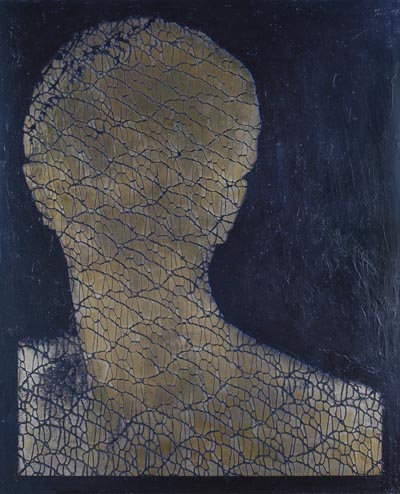
Photo-engraved Magnesium.
Lyndon Baynes Johnson.

 Emeshed Man, 1966
Photoengraved metal plate with pigment.


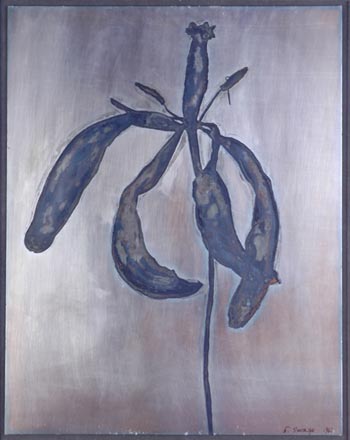
Element Dried Tulip, 1967
Photoengraved metal plate.

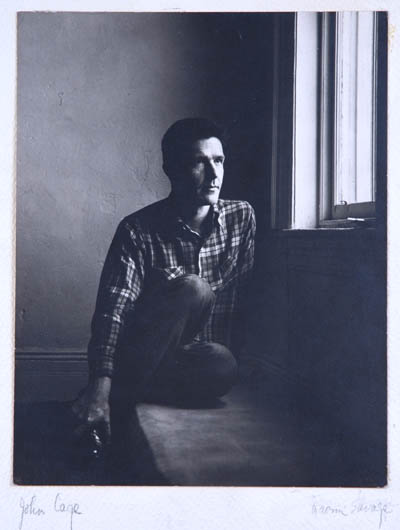
John Cage. n.d.
photograph.

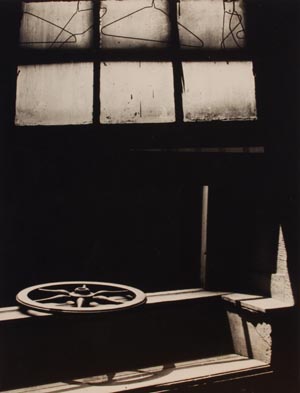
Untitled.
Gelatin silver print.

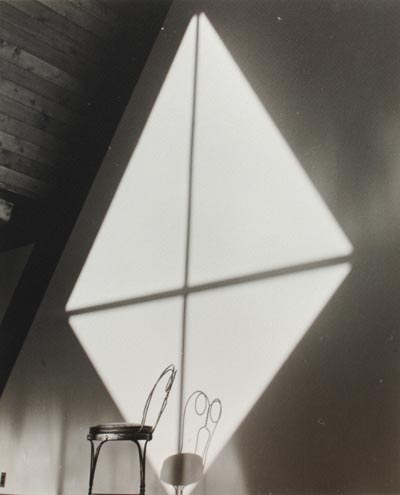
Untitled (Chair in room) c. 1951
Gelatin Silver Print.


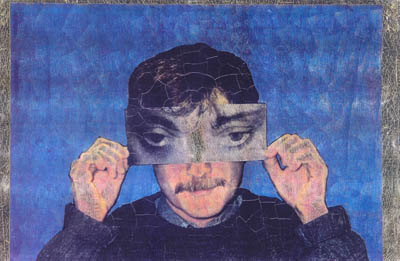
Francis Eyes. n.d.
Digital Print on Gold Leaf.

Elle, 1980.
Silver Gelatin Print-- solarized. 

...
She's really hard to find work on. There's an image in my text called Pressed Flower, 1969-80. Photo/intaglio with pastel. I can't find it anywhere.
I'll add more to this post later.

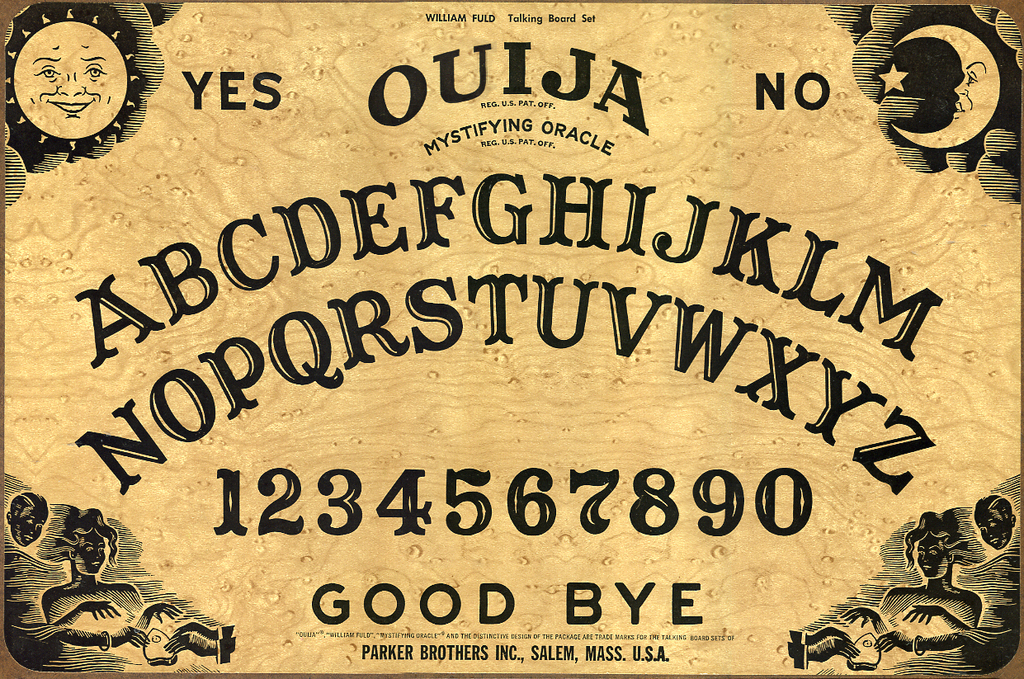
Arthur Fellig. Ouija. WEEGEE.

From my notes over the summer:

Police reporter.
a lot of things happened at night .
he was the first one on the scene.
he loved the nightlife and he loved the crime.
        Crime is my oyster... it is full of black pearls.

Time of great warfare between organized crime.
       They liked him-- giving them an image...

Gunsmith's Sign


flash overexposes
out of focus
=
oppressive.
__________________________________________________________________________________
Weegee= Ouija
He had a police scanner and a working darkroom in the trunk of his car.
Because he was usually the first photographer on the scene of a crime, he was awarded the name Ouija because it was as if he predicted these happenings.
 He would process the images right then and there and then send them off to the newspapers of which he was working.
After a while of printing through the newspapers, his images became classics (almost cult classic-like) and then he started having shows and the style of his crime photos have inspired cinema.


Video:

Weegee Tells How.


I love when the title of a work either changes everything or reaffirms everything you thought about it in the first place. 

I love being surprised by an art work but also realizing that I understood a work just as the artist intended-- and often titles make this possible.

Other times it's an artist statement. 

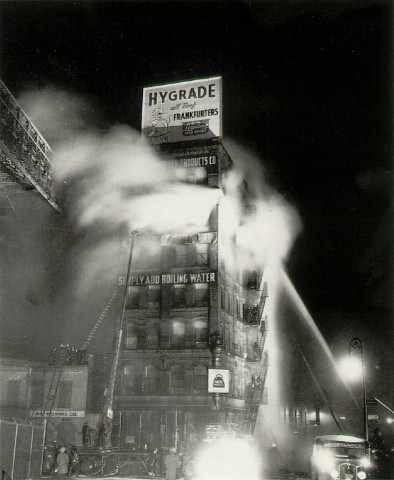
Simply Add Boiling Water, 1937

Fire fighting. 


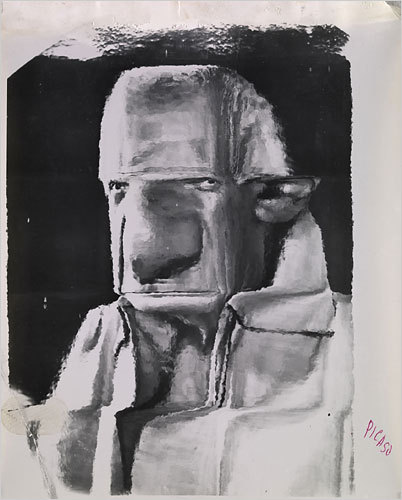
 Later in his career he distorts the image.

 He sold pamphlets.

HOW TO MAKE PHOTO CARICATURES
By Weegee (The Famous!)
WANT to accent a prominent feature such as the eyes or jaw in a photo caricature? Using distorted sheet plastic as a supplementary camera lens will do it. Take a clear sheet 1/16 to 1/2-inch thick, heat it in an aluminum foil pan, twist it with gloved hands and dunk it in cold water. Then turn it before the subject, looking through for the desired effect. Repeat the heating and twisting if necessary. Once you have the effect, take the photo through the plastic. Some remarkable results are illustrated. 


Weegee began to produce a series of distorted photographs, based on the lens he had devised for his 1948 film Weegee's New York, and from his experiments begun in the Acme darkrooms.
There were three basic methods Weegee used to create these distortions. Weegee's first experiments were made by placing a textured or curved glass or other translucent material between the enlarger lends and the photographic paper. This effect would alter the image of the negative to varying degrees depending on the density pattern, or texture of the material he used. He also tried manipulating or mutilating copy negatives by placing them in boiling water, or melting them with an open flame. The third method he employed involved making multiple exposures from the same or various negatives. Given his darkroom talent, he sometimes combined these techniques. Weegee later added a system by which he would affix a kaleidoscope to the end of the camera lens, or use it to replace the camera lens, letting the refractive designs multiply what the camera would have recorded as a single image. From this period until his death, Weegee concentrated on what he alternately called his "distortions," "caricatures," "creative photography," or most often, his "art."


 Marilyn Monroe, Plastic lens, c.1960

Picasso Distortion, c.1956.


 Inspires:

also anyone with a Mac. 

This is my friend Kara.


This is my twin, Jessi and her boyfriend Will. 

Me and Kara! :]


Oh, and this is the funniest video ever of someone laughing at themselves using the distortion tool. 

Henri Cartier-Bresson.


His Artist Statement
For me the camera is a sketch book, an instrument of intuition and spontaneity, the master of the instant which, in visual terms, questions and decides simultaneously. In order to “give a meaning” to the world, one has to feel involved in what one frames through the viewfinder. This attitude requires concentration, discipline of mind, sensitivity, and a sense of geometry. It is by economy of means that one arrives at simplicity of expression.
To take a photograph is to hold one’s breath when all faculties converge in a face of fleeing reality. It is at that moment that mastering an image becomes a great physical and intellectual joy.
To take a photograph means to recognize – simultaneously and within a fraction of a second– both the fact itself and the rigorous organisation of visually perceived forms that give it meaning.
It is putting one’s head, one’s eye, and one’s heart on the same axis.


1944
Henri Cartier-Bresson
Henri Matisse, Vence, 

__________________________________________________________________________________
From my notes over the summer:

He started out a painter (joined French Resistance)
Like Lartigue, he was given a Brownie as a kid.

"The Decisive Moment"-- [so eloquently illustrated above]
a. not quite straight
narrow depth of field
&sometimes he has blurry images.                                             "plasticity"
                                                                                                [His titles are places]
Takes pictures leading up to & after the moment.
Advantage of roll film.

pre-anticipation- to be able to anticipate the decisive moment

Travels the world
Doesn't have one focus.

Not passing judgment.
-our common humanity-


an·o·nym·i·ty

[an-uh-nim-i-tee]  
–noun, plural -ties.
1.
the state or quality of being anonymous.
2.
an anonymous person: some fine poetry attributed to anonymities.

He did not want people to know what he looked like.
Camera w/ black tape
 
meant to be and wanted to be.... not seen.
Priceless liquid moment
He is discovering-- not creating.
_____________________________________________________________________________ 
 
 George VI's Coronation, England, 1933
 
Mexico, 1964
Valencia, 1933.

There is always a braking up of spaces... a geometrical overtone-- if geometry has a tone. :] To me it does.

Calle Cuauhtemoctzin, Mexico City
11 x 14" silver print


Friday, November 5, 2010

Bill Brandt.

From my notes over the summer:

He used a police camera which is not usually used to take nudes.
He studied under Man Ray.
emphasize or morph the nude figure-- abstraction.
Human
Rock/driftwood-- makes her more a part of nature.
Enegmatic
Henry Moore-- the most important English Sculptor at the time.
Picasso
     when you're so close to someone that your eyes can't focus in the traditional way-- binocular.
Steiglitz and Steichen
   The Family of Man
   We're all the same family. together.
    Defined an era of peace- optimistic.
    Reassures us that most of us are good.

______________________________
From the text:
Brandt, Britain's best-known photographer of the postwar years, was a unique phenomenon. He had been involved with Surrealism through his association with Man Ray in the 1920s and with the documentation of contrasts among the classes in the 1930s, which he collected in his first publication, The English at Home (1936). Brandt's portraits, landscapes, and nude studies made after the war encompass a variety of different approaches. In the search for what he termed "something beyond real," he found that optic distortions-- the result of using an extremely wide-angle lens and a very small aperture-- produced a curious yet poetic landscape in which human form and nature merged. This particular approach has attracted relatively few followers in his native country, but Brandt's emphasis on capturing inner realities through the imaginative use of light insprired the work of Paul Hill, whose affinity to the mysicism of Minor White is also apparent in Arrow and Puddle, Ashbourne Car Park.

Bill Brandt,  Nude, East Sussex Coast, 1953.

Paul Hill, Arrow and Puddle, Ashbourne Car Park, 1974.

 ______

 
More Bill Brandt:

He just  knocks on this family's door and says do you mind if i make a few photographs?

Why, yes, of course. 

Bill Jay Ouija (Weegee)

Extension
elongation
Morphing the figure into a landscape within a domestic scene.
Soho Bedroom, 1938
I enjoy the broken up spaces-- it allows for subtlety to appear through the lighter areas. 
I always enjoy his use of high contrast.
The loss of insignificant details makes more obvious what is important.
These guys were watching a race.

Bill says that luck, often, has a lot to do with the images that he gets. 
Sort of like being at the right place at the right time. 
He didn't think that his images were that special until times changed and then the streets with no cars, the night life with no street lights, the people with lovely clothes and a simplicity of life just seemed to make the pictures so much more. 
When asked if he had a problem with people posing too much when being photographed he answered that people often don't pose for long and they forget about the camera after a while. 
I agree for sure. 
I like to talk to people while photographing them until i notice through the lens that they're just looking at me and not at a camera.


Interview with Bill Brandt
Q: Why do you think people like so much looking at photographs; is it because people like looking at time passing?
A: I dont know i think it's just a fashion that changed. At the time people weren't interested in photography, now everybody's interested. 

He started photographing in 1929. He's never done anything but photography and always wanted to.
Born in 1904 in London. Both parents were of Russian decent and he spent his early years in Germany.
In his 20s he studied under Man Ray.
1931- settled in England and started to work as a photojournalist.
"Brandt uses the camera as an extention of the eye-- the eye of a poet."
"Brandt has done for London what Bresson and Atget have done for Paris. "
He has not written or said much of anything about his own work.

"The witty life of London in the 30's and the compassionate photos he took during the Depression produce some of his most memorable images."

Tuesday, November 2, 2010

I find myself wanting to paint.
This is a good thing.
I'm feeling better and better.
:]

Some of My Works-- Mixed Media and Collage


 Mixed Media Drawing
Graphite, Charcoal, Conte', Acrylic, Wine, Tape

 Collage

Xerox Copies of
Drawings, Found Imagery, and Coffee Stained Paper


"Sexually Deprived, Depraved, Frustrated."
Mixed Media
Coffee-stained Newsprint with India Ink words, Newspaper, Paint, Magazine Imagery, and Beer Label.

Repurposing...

Sunday, October 31, 2010

props to this girl:

I have no clue who this is...
________________________________________________

My sister had a party last night...
pics soon to come. 
I was obsessed with her Canon Mark II 5D. 
You would be too.
It makes me cream my panties for sure.
<3. 

Followers